Tarot Reading GuideAsk Better Questions: 10 Tarot Taboos and Tips for More Accurate Readings
When work, life, family, and studies keep you spinning, with seemingly no moment to catch your breath, some people turn to tarot readings for guidance. Twosevenths is here to share 10 essential dos and don'ts for tarot card readings. Understanding these tips will help you formulate clearer questions when getting a tarot reading, allowing you to see the core of your issues or discover entirely new possibilities.
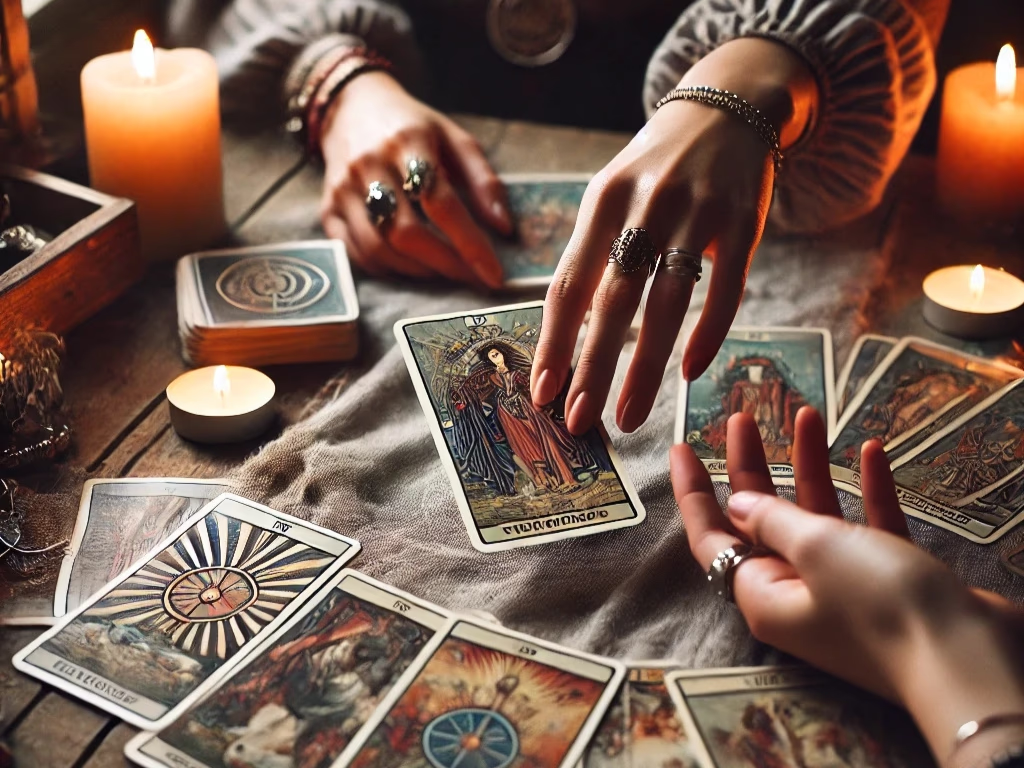
Tarot card reading is a form of divination that uses a deck of tarot cards to gain insight into the past, present, and future.
Tarot cards originated in Europe, and while there are various accounts of their earliest beginnings, the tarot cards that emerged in the late 15th century were initially used for card games. Only later did they gradually transition to divination and spread from Europe to other regions.
Generally, a tarot deck consists of 78 cards, divided into the Major Arcana (22 cards) and the Minor Arcana (56 cards). "Arcana" is the plural of the Latin "Arcanum," meaning "hidden knowledge or truth."
Each tarot card features an image that can be linked to deities from ancient Greek mythology, carrying its own story and symbolic meaning. By interpreting tarot cards, we can also gain a deeper understanding of the Western worldview.
As tarot cards have become increasingly popular worldwide, people today tend to use them for self-exploration, employing divination and introspection to navigate current life challenges.
Are tarot cards accurate?
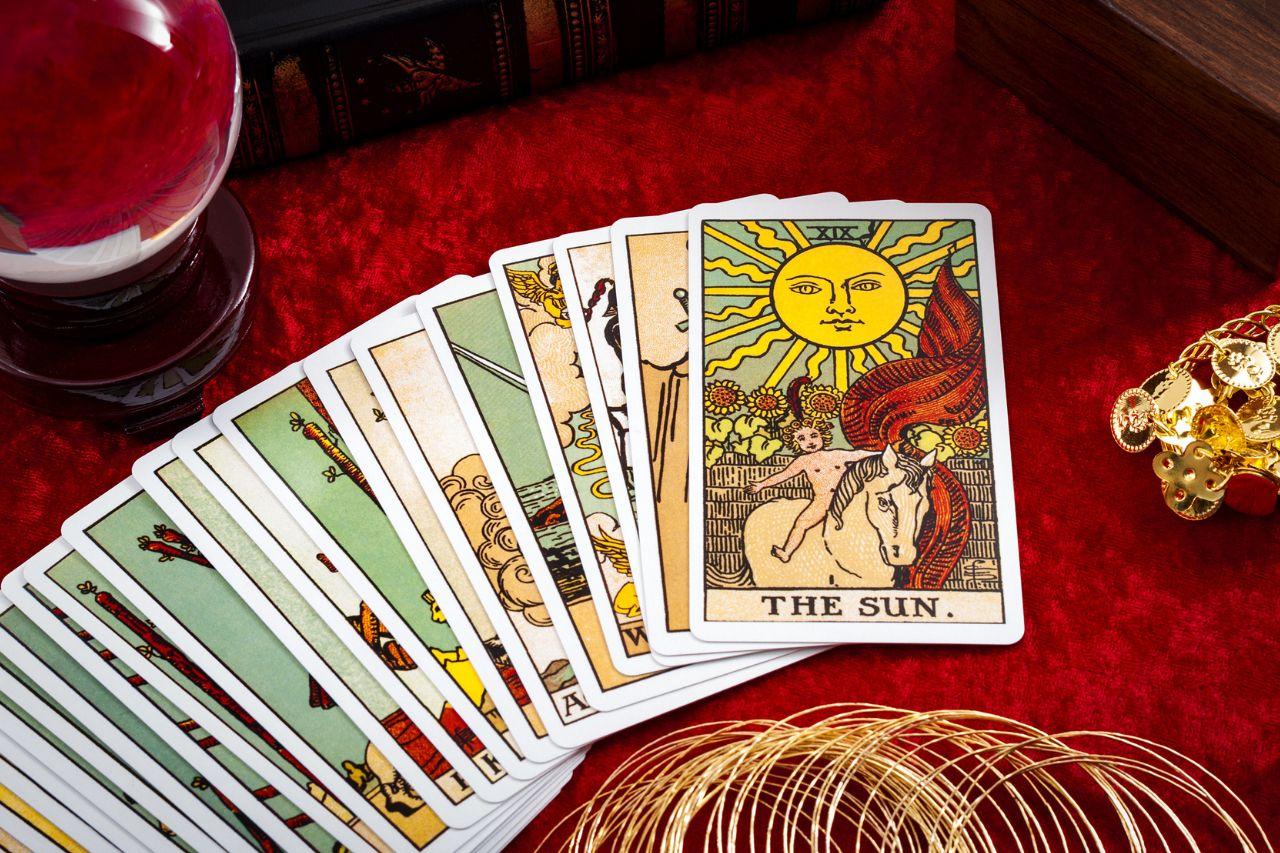
Many people ask, "Are Tarot readings really accurate?" The answer is that accuracy depends on how you ask the question, your current state of mind, and the person interpreting the cards.
✦Focus on your present energy to reflect your subconscious state.
Tarot cards are like a mirror, reflecting your current thoughts, emotions, and choices rather than predicting an "absolute future." When you focus on a question and draw a card, that moment is actually the result of your subconscious interacting with universal energy, naturally leading to cards that align with your present situation.
✦Asking the right questions at the right time makes it easier to get precise guidance.
When you have a clear question and draw cards with a calm mind, the cards are more likely to reveal your current "challenges" and "directions for choice." For example:
- "Should I quit my job?" → Tarot can help you see the possibilities and risks of resigning at this stage.
- "What will my future be like?" → This kind of vague question makes it harder to get practical information; a specific question will yield more useful insights.
✦A tarot reader's sensitivity and experience are key.
The same tarot card spread can yield different interpretations from different tarot readers. The more experienced a reader is, and the more they understand human nature and energy flow, the better they can pinpoint the core issues that resonate with you, sometimes with just a single illuminating sentence.
Here's how to use tarot cards for divination.
The actual fortune-telling process and methods vary by fortune teller. Typically, before starting the reading, the fortune teller will spend some time chatting with you to understand your purpose for coming today. Then, the fortune teller will help you focus your questions, shuffle, cut, and draw cards. Since there are many types of tarot spreads, we'll explain a few common ones here.
✦Single Card
When you have a clear question that only requires a "good or bad" or "yes or no" answer, drawing a single card for interpretation is often the best method, as it quickly reveals the tarot's advice.
✦Three of a Kind
Drawing three cards usually means the question at hand needs to be considered from different angles, so the three cards will each have a different meaning.
In a chronological spread, they might represent "past, present, future." If the question involves another person, they could signify "self, other, and the relationship between the two." If you're seeking advice for a current dilemma, the cards are likely to reveal "strengths, weaknesses, and recommendations."
✦Four of a Kind
When a question involves interpersonal relationships, it often requires considering factors like timing, personal circumstances, and the involvement of others. In such cases, a four-card spread may be used, with each card reflecting your current state, the other person's state, and the future direction of the relationship, among other insights.
To get the most accurate tarot card reading, ask open-ended questions that focus on "how" or "what" rather than simple "yes/no" questions.
Many people feel confused about how to ask "precise" questions when consulting a tarot reader.
When you have a lot of questions, it's natural to seek help from a fortune teller. But a fortune teller isn't a mind reader. If you don't clarify your questions beforehand, even if the cards are drawn smoothly, it'll be hard to get a precise answer. That's why learning to ask "precise questions" is essential for any divination session.
So, how should you phrase your questions?
A good question considers many factors: time, place, event, the people involved, and a binary choice (e.g., "should I or shouldn't I," "is it good or bad"). Including these elements in your question will help the tarot cards give you better advice.
✦First, clarify: What "aspect" are you interested in?
Identify your focus: Is it relationships, career, social life, finances, academics, or personal growth? This crucial first step helps you narrow down your concerns, preventing you from mixing all your problems together.
✦Turn "Vague" Questions into "Actionable" Ones
For example, "What does my future hold?" is too broad and vague.
Instead, try asking:
- "How can I prepare to perform better at work over the next three months?"
- "Is there anything specific I should pay attention to regarding the development of my current relationship?"
✦Give the cards some context or background to make them more meaningful.
For example, you might ask, "What does the next three months hold for my side hustle?" or "I'm weighing two paths, A and B — which one will be more beneficial for my future?"
✦Be clear: Are you looking for a recommendation or a prediction?
The questions differ in their intent:
- For advice: Ask, "What can I do?" or "What mindset shifts do I need to make?"
- For predictions: Ask, "If I do this, what are the possible outcomes?"
Yes, tarot card readings are well-suited for exploring relationship issues.
Relationship issues are often among the top three most critical, life-altering concerns for many people.
Because tarot readings typically require clear and specific questions, if you're facing relationship troubles, you might ask yourself the following before a reading: What exactly is my problem? Is it about whether this person is right for me, how to overcome a relationship hurdle, or something else that's stuck?
No matter the relationship issue, clarifying the true sticking point will help you focus the reading and get more precise advice!
Yes, you can ask about anything during a tarot reading.

While it's common to "ask the Tarot about everything," this doesn't mean Tarot can answer every life decision. If your question is about physical or mental health, Tarot might offer guidance on areas for adjustment, but specific methods still require professional medical consultation.
Tarot is primarily for "divination," meaning it helps people find solutions and advice when they encounter problems. However, if you're curious about your birth chart or your life's original settings, this falls outside the scope of Tarot services, and we recommend exploring other mystical tools.
Tarot cards can predict the future for up to three months.
The ideal time between tarot readings varies from person to person, but some readers suggest waiting at least three months before a new session. This allows time for changes to unfold, so you can then ask more specific questions about your current situation, enabling the cards to better address new challenges.
Of course, change doesn't happen overnight. For significant shifts to occur within three months, your own efforts and decisions are crucial. It's important to remember that while tarot can offer guidance and advice, you are ultimately the one who brings about real change in your life.
What are the taboos of tarot card reading?
Divination is a professional practice, and whether you believe in it or not, approaching a reading with impure intentions disrespects both the tarot cards and the diviner. Some people go in with skepticism, deliberately trying to challenge the accuracy of the diviner and the tarot cards, but this can significantly affect the outcome of the reading. Here are some behaviors to avoid during a divination session:
✦One question, one answer: avoid confusion from repeat readings.
Tarot readings focus on your current energy and state, and a common principle in the divination community is "don't ask the same question twice." This means it's not advisable to ask different psychics the same question repeatedly, or to ask the same question multiple times in a short period. Doing so can lead to contradictory results and deepen your anxiety and uncertainty. Trusting the message of the cards in the moment is the only way to receive truly valuable guidance.
✦A calm mind is key: Emotions can affect tarot energy
Tarot is a tool for energy flow, and if you're feeling overly emotional or extremely low, it can interfere with the card draw and the reader's judgment. It's best to have a reading when you're calm and stable; approaching the cards with a clear mind allows you to better receive messages from the universe and helps the reader interpret your current challenges.
✦Ask yourself, not others: Respect others' privacy
Tarot readings are best for addressing personal issues directly related to you, such as relationships, career, or your inner state. It's not advisable to ask about other people's private matters, like "What is he thinking?" or "Is she cheating?" Such questions can infringe on others' privacy and violate the ethical principles of divination. By focusing on what you can control and change, you can truly become the master of your own life.
✦Avoid life-or-death and major illness decisions: Leave it to professional judgment
Tarot is a tool for spiritual guidance, not a basis for medical diagnoses or life-and-death decisions. For serious illnesses, accidents, life-and-death matters, or similar issues, we recommend seeking assistance from a doctor or other relevant professionals. These types of questions not only fall outside the scope of tarot itself but can also lead to excessive dependence and unnecessary panic for the individual. The wisdom of tarot should be used to live better in the present, not to predict life or death.
Finding the right tarot reader involves several key steps.
Taiwan offers a wide variety of tarot readers, and it's a good idea to do some research online first. Many tarot readers have their own social media presence, which can help you determine if a particular reader is a good fit for you.
A tarot reading is a process that relies heavily on intuition and personal connection. Many readers post videos, explain card meanings, and share testimonials from other clients on their social media. Take some time to explore this information and consider: Do you like the way this reader speaks? Does their interpretation style resonate with you? Would you feel comfortable having them read for you? Reading about other people's experiences can provide valuable insights and help you make an informed choice!
While you're here, check these out ↓
- 01Taipei Soul-Soothing Recommendations|Can't sleep, feeling restless? Three Taipei temples for soul-soothing rituals.→
- 02Kaohsiung Exorcism Recommendations|Top 2 Kaohsiung Temples for Exorcisms, Reviewed→
- 03Your ultimate guide to the Mayan calendar|What is the Mayan calendar? The Mayan 13-Moon calendar helps you understand yourself in this lifetime.→
Before a tarot reading, there are a few things you should do to prepare.
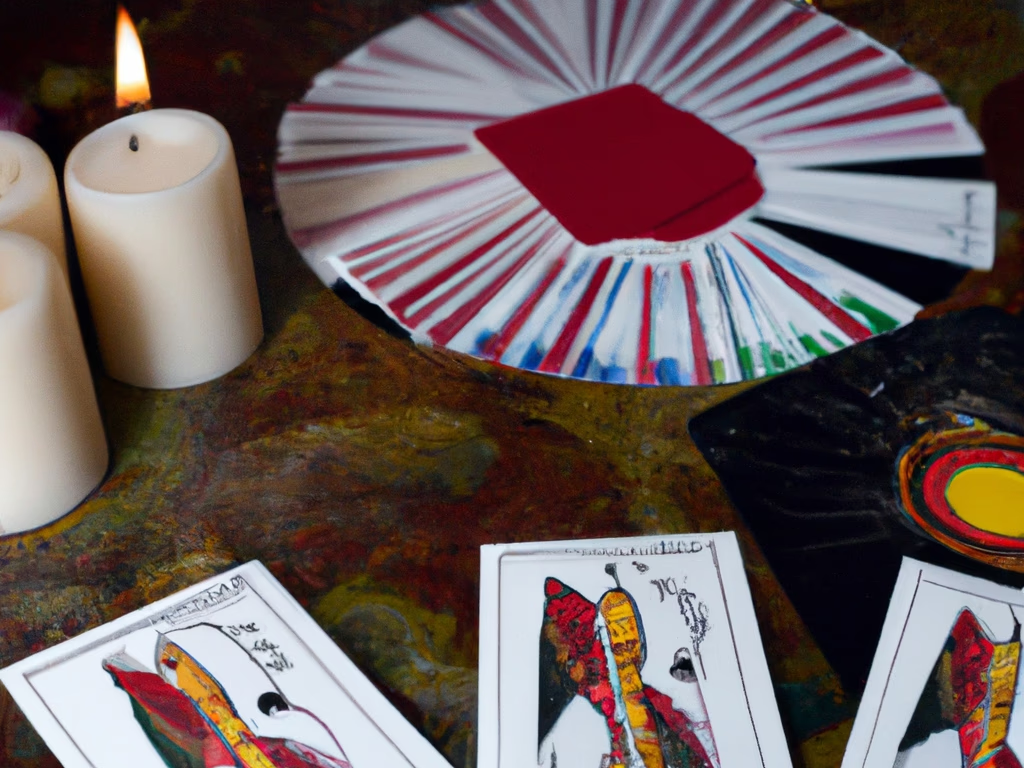
If you're new to tarot card readings and feel nervous even after booking your session, ask yourself two questions before you go:
- Is my question clear enough?
- Am I feeling calm, confused, or anxious right now?
It's natural to feel uneasy about an unknown tarot reading. Remember to approach it with an open mind, share your challenges and questions with the reader within your comfort zone, and truly believe that the tarot will offer you the most suitable advice!
✦You should view the results of a divination as a reference for your current situation, rather than a definitive prediction of the future.
Tarot readings don't always deliver good news, but there's no need to panic if you receive a challenging outcome. Instead, engage with your tarot reader: ask why the cards are offering this particular advice, and explore other interpretations of the spread. Sometimes, a seemingly negative result actually signals that change is necessary, encouraging you to break free from a stagnant situation.
So, whether the reading is positive or negative, discuss with your reader what steps you can take next. When you leave the session, carry the tarot's guidance with you, ensuring that every subsequent step you take is more stable and purposeful.
Final Thoughts
This has been Twosevenths' Tarot reading guide, with 10 essential Tarot taboos and tips.
People who turn to Tarot are often looking for both "correct" answers and a sense of comfort and strength. The process of drawing and interpreting cards has a sacred, ritualistic feel, allowing one to temporarily set aside rationality and follow inner intuition. While Tarot may not predict the future, it can help us clarify our present situation and bravely face challenges. When you feel lost, Tarot cards might just help you find your way again.
Don't miss these either
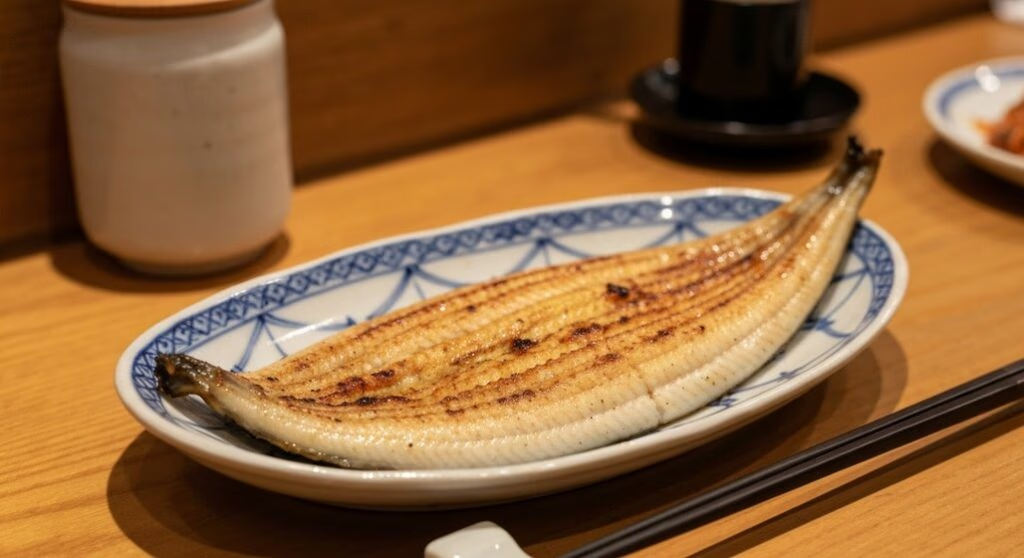
Tokyo's Best Shirayaki Unagi: Charcoal-Grilled to Perfection, Unlocking Pure Eel Flavor! | A Review of 1 Tokyo Unagi Venue

Tokyo Wagyu Yakiniku Recommendations|Melt-in-Your-Mouth A5 Wagyu! Two Tokyo Yakiniku Venues Reviewed

Taichung Soul-Soothing Recommendations|Can't Sleep, Feeling Unstable? 3 Taichung Temples for Soul Soothing

Reader Comments
No comments yet — be the first to share your thoughts.