Your ultimate guide to the Mayan calendarWhat is the Mayan calendar? The Mayan 13-Moon calendar helps you understand yourself in this lifetime.
It seems like every recent gathering revolves around horoscopes, numerology, Human Design, and astrology. As adults, we often feel even more confused about the future: with so many paths to choose from, which one aligns best with our "original factory settings," and which will lead us to a happy life? This time, Twosevenths introduces you to the buzzworthy "Mayan 13-Moon Calendar," exploring how this ancient Mayan calendar system has transcended time to help modern individuals decipher life's many mysteries.
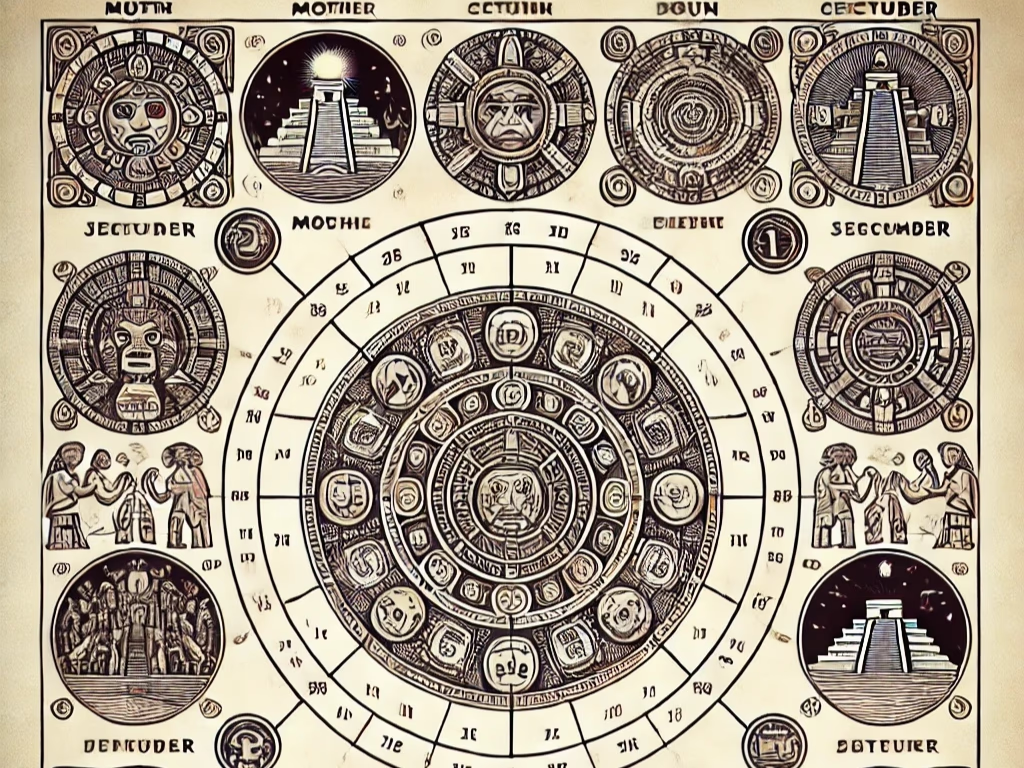
The Mayan calendar is a complex system of timekeeping developed by the ancient Maya civilization in Mesoamerica.
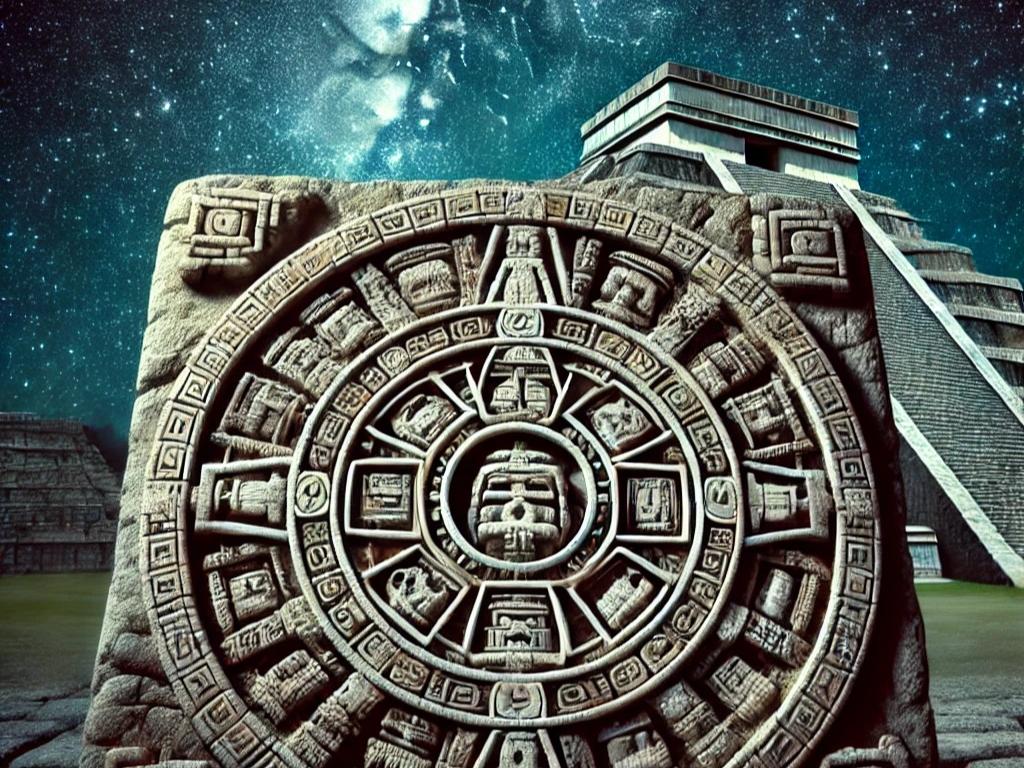
The 13-Moon Calendar is a calendar system used by the ancient Maya people. If you search "Maya 13-Moon Calendar" on Google, you'll typically see a long list of results stating that "the 13-Moon Calendar comes from the ancient calendar used by the Maya people." But how much do you really know about this ancient calendar?
The "Maya calendar" is a system used by the Maya people, with dates beginning in 3114 BCE, over five millennia ago. The entire calendar is divided into three parts: the Tzolkin, the Haab', and the Long Count calendar.
Similar to the familiar Heavenly Stems and Earthly Branches in Taiwan, the Tzolkin and Haab' calendars combine to record days, forming a cycle that repeats every 52 years. After each cycle, the same calendar combination begins anew.
✦Tzolkin Calendar
The Tzolkin calendar is widely recognized as a religious calendar, with a logic unrelated to astronomical or natural cycles.
This calendar, composed of 20 calendar glyphs and 13 numbers, spans 260 days and features 260 distinct glyphs. Each glyph carries a specific meaning, allowing the glyph corresponding to a child's birthday to be used to interpret potential future careers and life paths. It is generally believed to possess both prophetic and divinatory functions.
✦Habu Calendar
The Haab' is the Maya solar calendar, and it also forms the basis of their agricultural calendar. It consists of 20-day months, with 18 months in a year, plus five additional days known as "Wayeb'", making a complete year of 365 days.
During Wayeb', the boundaries between the human world and the underworld disappear, allowing evil spirits from the underworld to roam freely. For these five days, the Maya intentionally minimize going out and perform religious ceremonies to avert disaster.
The Mayan doomsday prophecy is not real.
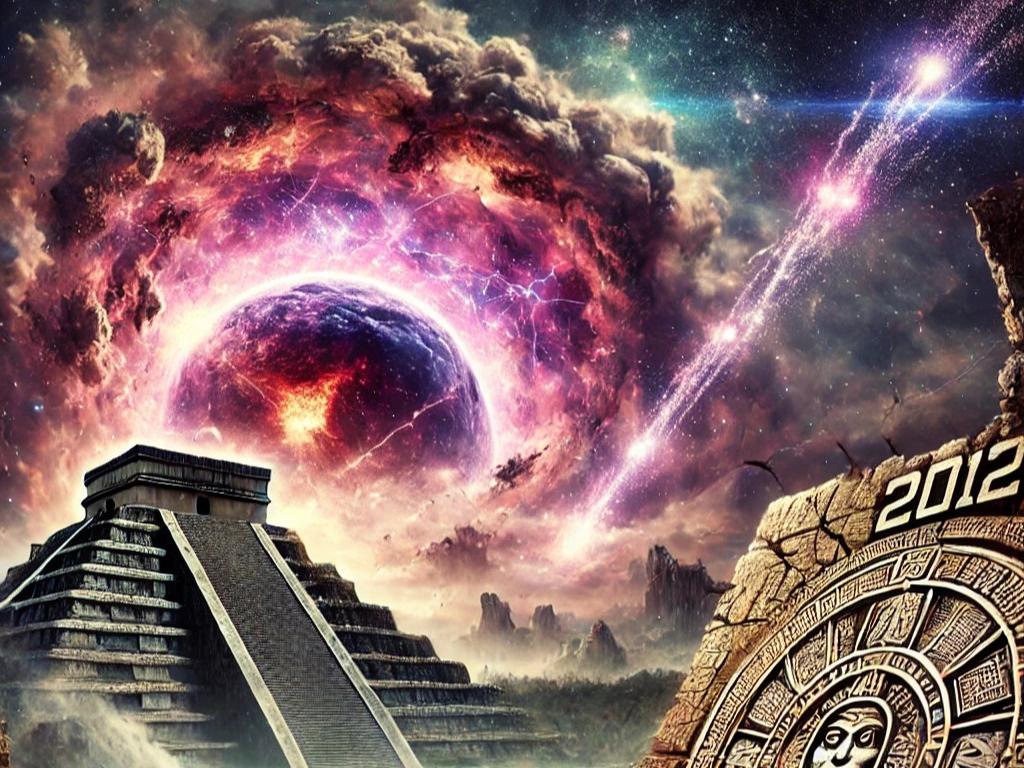
The Maya developed the Long Count calendar to record longer timelines, as the Calendar Round (composed of the Tzolkin and Haab' calendars) could not. To avoid confusion, the Long Count calendar begins on August 11, 3114 BCE. In this system, one day is 1 Kin, 20 Kin make 1 Winal, 18 Winal make 1 Tun, 20 Tun make 1 K'atun, and 20 K'atun make 1 Bak'tun. The calendar's end date was the last day of the thirteenth Bak'tun, which is the well-known "doomsday prophecy" of December 2012.
However, the Maya calendar's understanding of 2012 was not "the end of the world" but rather a time of rebirth and new beginnings. The news reports of a "doomsday prophecy" frequently heard that year were based on this misunderstanding.
The "Mayan Calendar" and the "Mayan 13-Moon Calendar" are two distinct systems.
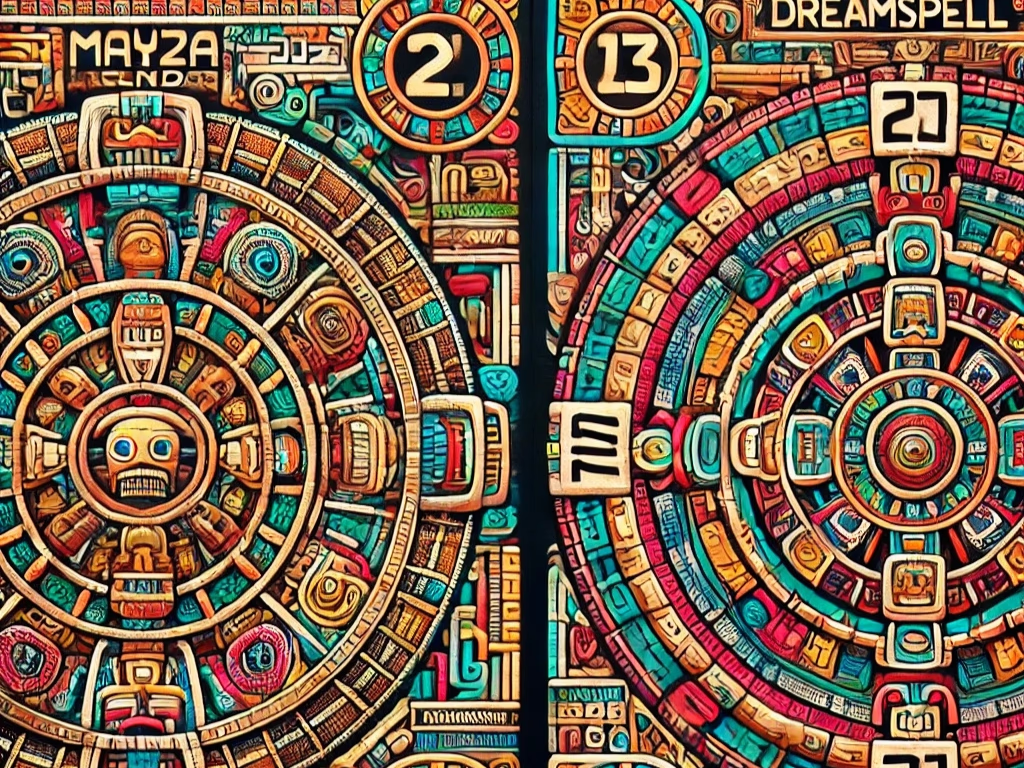
The Mayan 13 Moon Calendar originated with José Argüelles, an artist and art researcher who taught at various universities after earning his doctorate. After meeting his third wife, Lloydine, the couple drew inspiration from Mayan calendars, shamanic beliefs, the I Ching, and messages from galactic civilizations like Sirius. In the 1980s, they completed a calendar divination system called "Dreamspell." When it was first introduced to Taiwan, it was literally translated as "Dreamspell Calendar" but later became widely known as the "Mayan 13 Moon Calendar."
It's important to understand that while the Mayan 13 Moon Calendar references Mayan calendrical systems, the "Mayan 13 Moon Calendar" itself has never actually appeared in the historical records of Mayan civilization over its five-thousand-year history.
The Mayan 13 Moon Calendar is composed of 260 "kin" (or "glyphs"), formed by 20 totems and 13 tones: one totem combined with one tone creates a single kin. When you look up your Mayan calendar, you'll see a chart made up of five kin. The day you were born has a primary kin, positioned in the center, surrounded by four other kin representing guidance, support, challenge, and hidden power.
In the Mayan 13-Moon Calendar, totems and tones represent specific meanings.
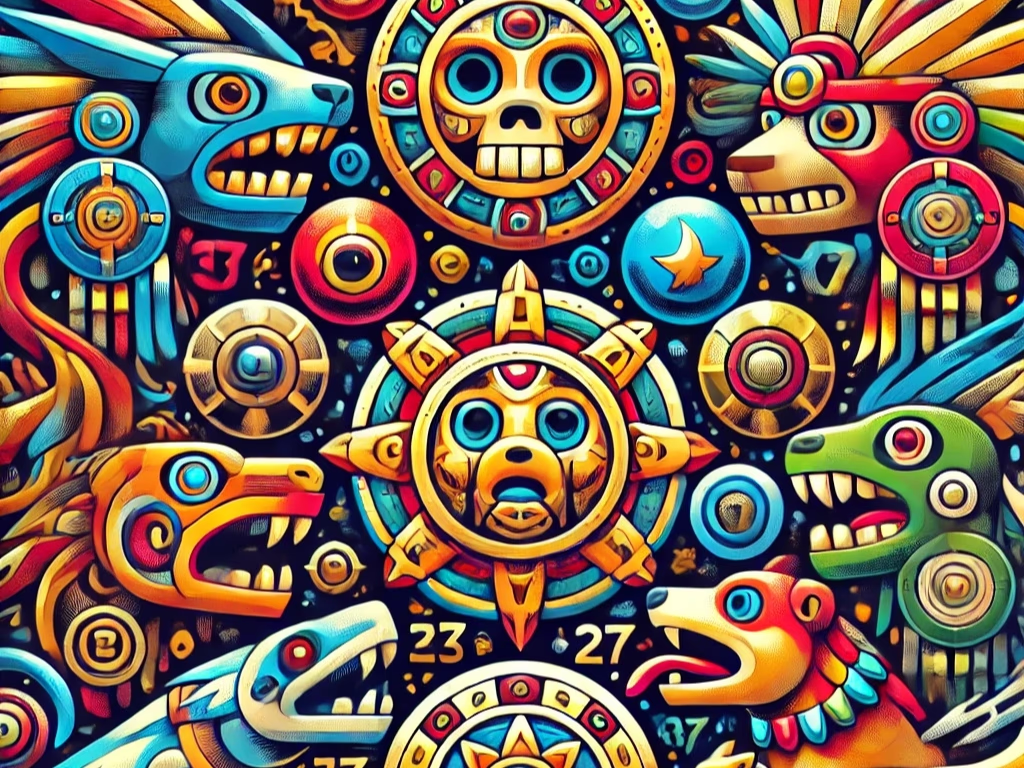
Many people new to the Mayan 13 Moon Calendar wonder: what exactly are "glyphs" and "tones"?
To understand this, we need to go back to the calendar's founder, José Argüelles. After completing the calendar, he assigned several keywords to each glyph as its original definition, allowing later interpreters to choose their method of interpretation from these keywords. This is why, even with the same glyph and keywords, different interpreters will have their own logical understanding.
The twenty glyphs can be divided into five groups by color, cycling through four colors: red, white, blue, and yellow. Each color also corresponds to its own energy and cycle. The glyphs are often derived from clear, relatable natural elements, such as Red Dragon, Blue Storm, Yellow Star, White Dog, and so on.
The thirteen tones each represent different qualities, referencing the thirteen numbers of the Tzolkin calendar. Each glyph is assigned one of these thirteen tones, and each tone has a corresponding animal symbol. The characteristics of these different animals extend into distinct qualities, which is why people with the same tone often share similar temperaments. The thirteen tones form a "wavespell," signifying cycles and flow.
The Mayan 13 Moon Calendar and the Gregorian calendar differ in several key ways.
The Mayan 13-Moon Calendar is often called the Western Farmer's Almanac. It emphasizes living in flow and fulfilling one's destiny, and you can also use the day's "seal" as a reference for daily life. Just as elders in Taiwan consult the Farmer's Almanac for important events like weddings, funerals, and even moving dates, the Mayan 13-Moon Calendar offers a similar function!
You can find your Mayan calendar information online.
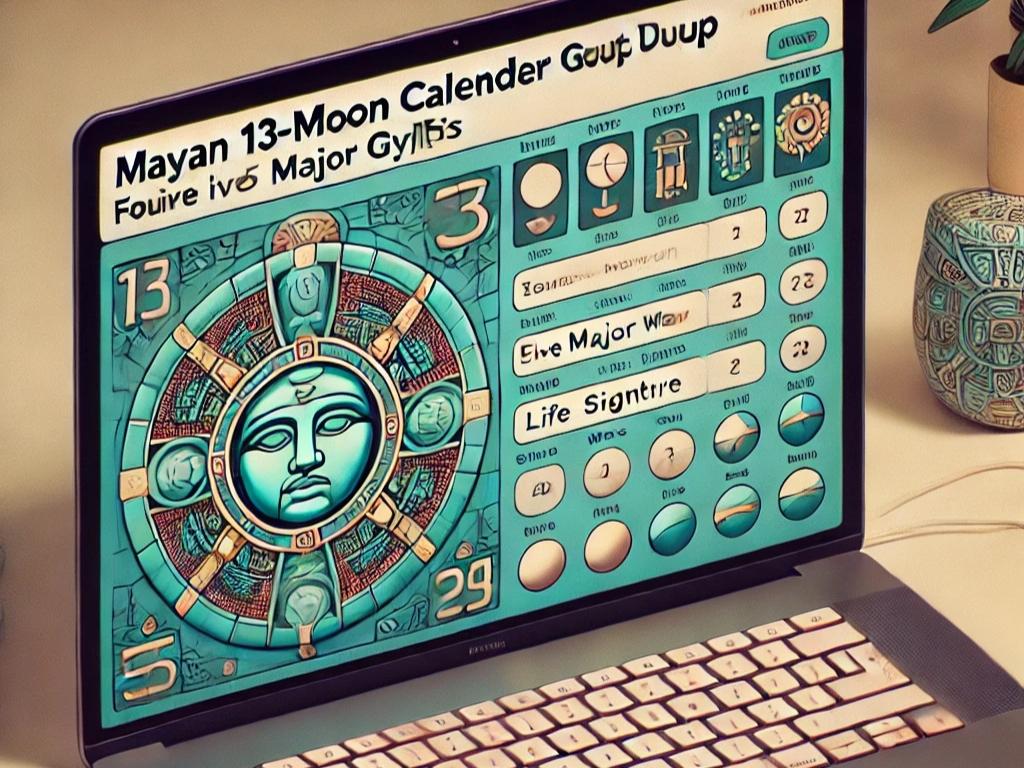
Each totem, combined with its tone, forms a unique imprint. With so many permutations and combinations in the Mayan 13 Moon Calendar, you might wonder where to look up your own Mayan calendar and discover your imprint. You can find your five main imprints and life wave by searching online for "Mayan 13 Moon Calendar." Many Traditional Chinese websites in Taiwan now support Mayan 13 Moon Calendar lookups; simply enter your birth date.
You can find a Maya calendar interpreter through a variety of channels.
More and more people are now studying the Mayan 13-Moon Calendar, and you can find various teachers offering paid interpretation services on any social media platform. If you live in Taipei, consider checking out Cecilia's website, "Mayan 13-Moon Calendar Interpretation Cecilia."
Cecilia has interpreted the Mayan Calendar for over a thousand people in the past five years. She excels at lively and engaging analyses and can discuss current life challenges, helping you explore hidden confusions and gently untangle inner knots through your Mayan Calendar reading.
Beyond Cecilia, many other teachers across Taiwan delve into the Mayan 13-Moon Calendar daily. Interpretation is never an easy task, and entrusting your life's imprint to someone requires both fate and courage. If you're curious about how to "flow with life," consider finding a Mayan 13-Moon Calendar teacher in your city and explore your life's original blueprint together!
Final Thoughts
This is Twosevenths' Maya Calendar cheat sheet, answering common questions about the Maya calendar system.
Whether it's Human Design, astrology charts, or the Mayan 13-Moon Calendar, each offers a path to better understand your inner self. If you've explored spiritual practices before, or if you're new to different ways of self-discovery, why not consider it a tool for "understanding yourself"? Throughout your life, you've likely resisted certain things, only to end up hurt; later, as you matured, you learned to go with the flow and reaped unexpected rewards.
If you're interested in fortune-telling, you might want to check out our Tarot Card Reading Cheat Sheet and Recommended Tarot Readings in Taipei.
Living in an age of high anxiety, we often focus on things unrelated to us, inadvertently adding to our emotional burden. If the Mayan 13-Moon Calendar can be a good medium to help you shift your focus back to yourself, then I encourage you to give yourself and this calendar system a chance. Entrust your life imprint to the person before you and embark on a soul-searching conversation!
Don't miss these either

Yingge Day Trip Itinerary|From the Ceramics Museum to Old Street Cafes: A Relaxed Getaway

Thermage FLX Explained|How it Works, Results, and Recovery for Facial Sagging

Microneedling Pen Guide | How to treat acne scars and pitted skin, how often to do it, and post-treatment care at a glance

Reader Comments
No comments yet — be the first to share your thoughts.