SUP Stand-Up Paddleboarding GuideCan You Go If You Can't Swim? 10 Things to Know Before You Go SUP
SUP stand-up paddleboarding has become incredibly popular in Taiwan in recent years. It offers a unique way to connect intimately with the water without necessarily getting wet, and the added security of a life vest makes it an appealing first-time water activity for many who are afraid of water or don't know how to swim. So, what exactly is SUP? Twosevenths is here to answer 10 common questions about SUP stand-up paddleboarding, helping first-timers enjoy their time on the water with confidence.
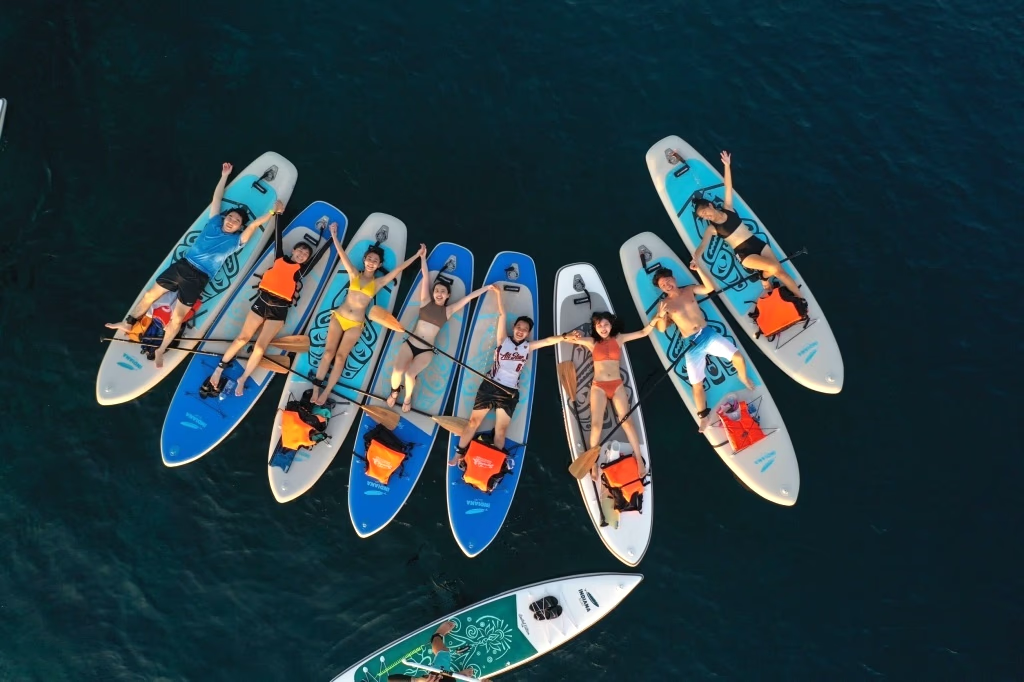
SUP stand-up paddleboarding is a water sport that combines surfing and kayaking.
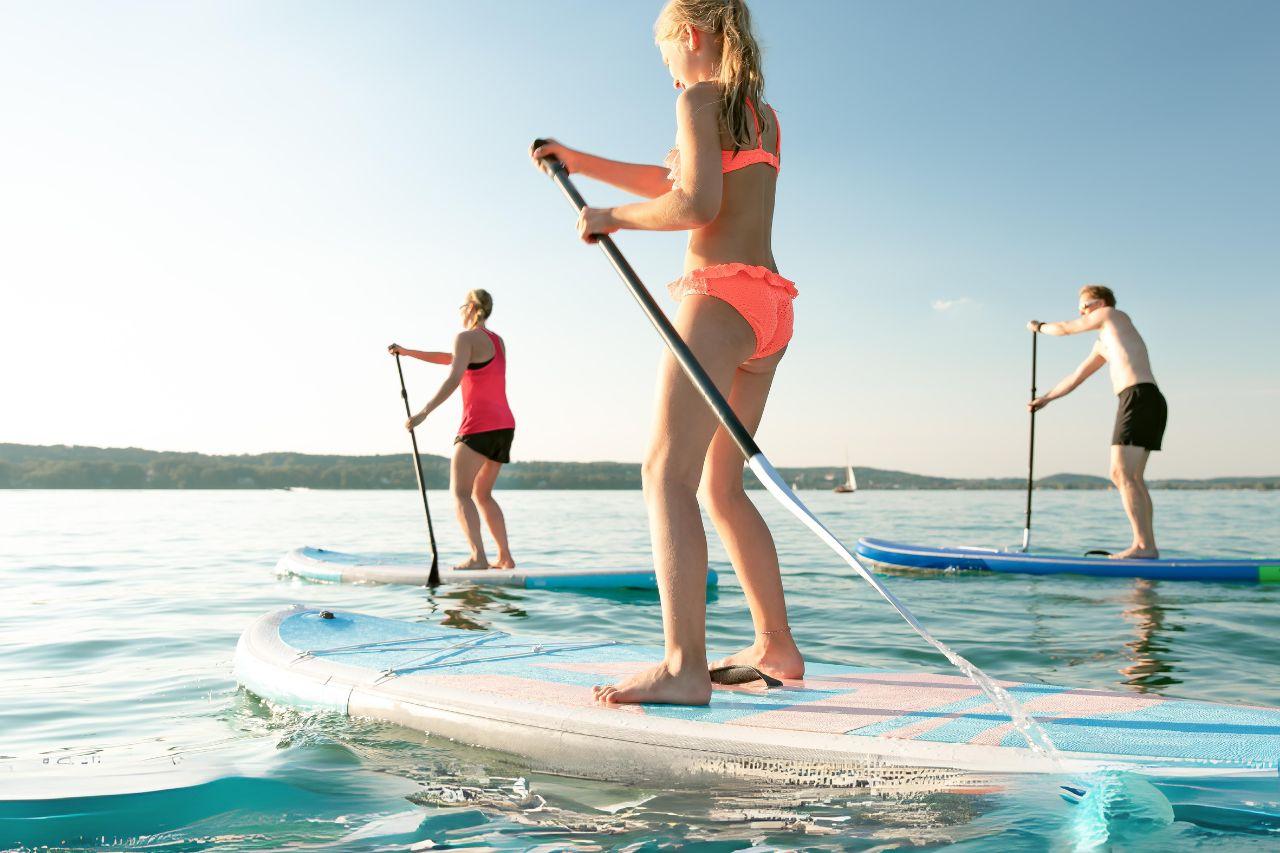
Stand Up Paddle (SUP) is a watersport where you stand on a specially designed large board and use a paddle to move through the water. Often simply called SUP, this activity takes place in various bodies of water like oceans, lakes, or rivers, and can be enjoyed for leisure, fitness, or competitive racing. SUP allows participants to take in scenic views while on the water, and it's also an excellent full-body workout that effectively trains balance and core muscles.
✦SUP stand-up paddleboarding is suitable for children aged 6 and up, provided they are accompanied by an adult.
Stand-up paddleboarding (SUP) has no age limit; anyone can enjoy it as long as they have appropriate flotation devices and safety measures. For children under six, we recommend sharing a board with an adult and wearing a life vest for safety. Even seniors in their seventies can happily paddleboard if they are in good health.
The main difference between stand-up paddleboarding (SUP) and kayaking is how you sit and paddle.
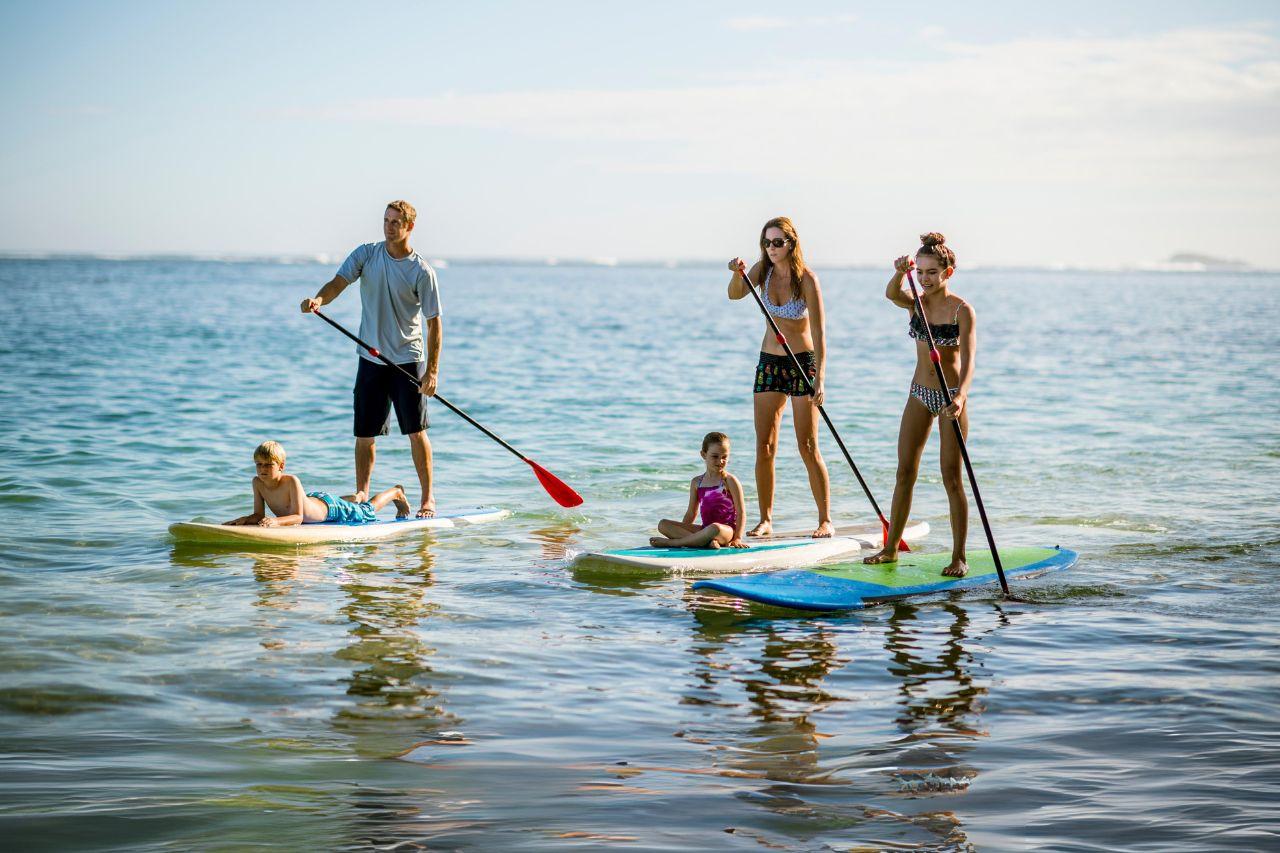
Stand-up paddleboarding (SUP) evolved from surfing, where you stand on a board and use your core strength to propel yourself with a single paddle. Kayaking, on the other hand, involves paddling from a seated position. The kayak's design keeps your body stable, and with support for your body and lower limbs, you engage your core to power through the water with a double-bladed paddle.
✦SUP stand-up paddleboarding is not necessarily more prone to falling into the water.
SUP paddleboarding and kayaking are equally safe. While SUP boards resemble surfboards, they offer excellent buoyancy and are wide and long, making them very stable and difficult to tip over. You can enjoy SUP in many ways—standing, kneeling, sitting, or even lying down. If you do fall in, a leash keeps you connected to the board, and its flat surface makes it easier to remount than a kayak. Overall, SUP is extremely safe; there have been no reported drowning incidents in Taiwan involving SUP in normal wind and wave conditions.
Yes, you can absolutely try stand-up paddleboarding (SUP) even if you don't know how to swim.
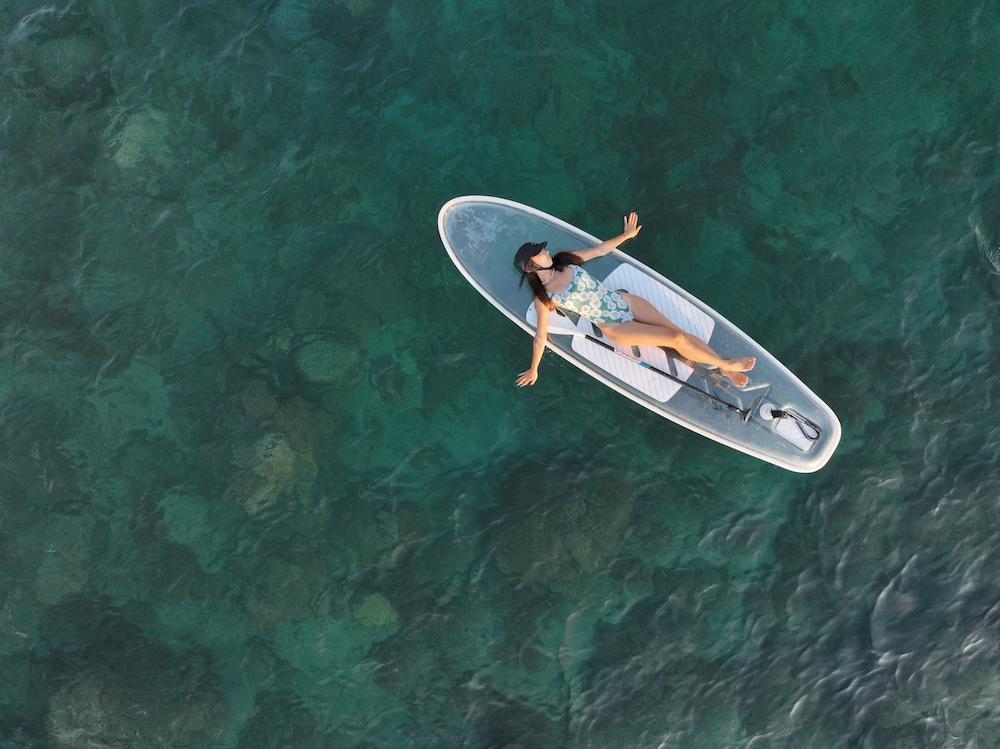
You absolutely don't need to know how to swim to enjoy stand-up paddleboarding (SUP)! Well-equipped venues offer three key safety measures for SUP: highly buoyant boards, leashes connecting you to the board, and personal flotation devices (PFDs) like vests or waist packs. For beginners, starting in calm, enclosed waters virtually eliminates the risk of falling in. Even when learning to stand, professional instructors significantly reduce the chance of a tumble. If you do happen to fall, most SUP lessons teach you how to remount the board, and with these three safety features, even if you can't swim or are afraid of water, you can still get comfortable with water activities through SUP.
Xinhai Diving Center
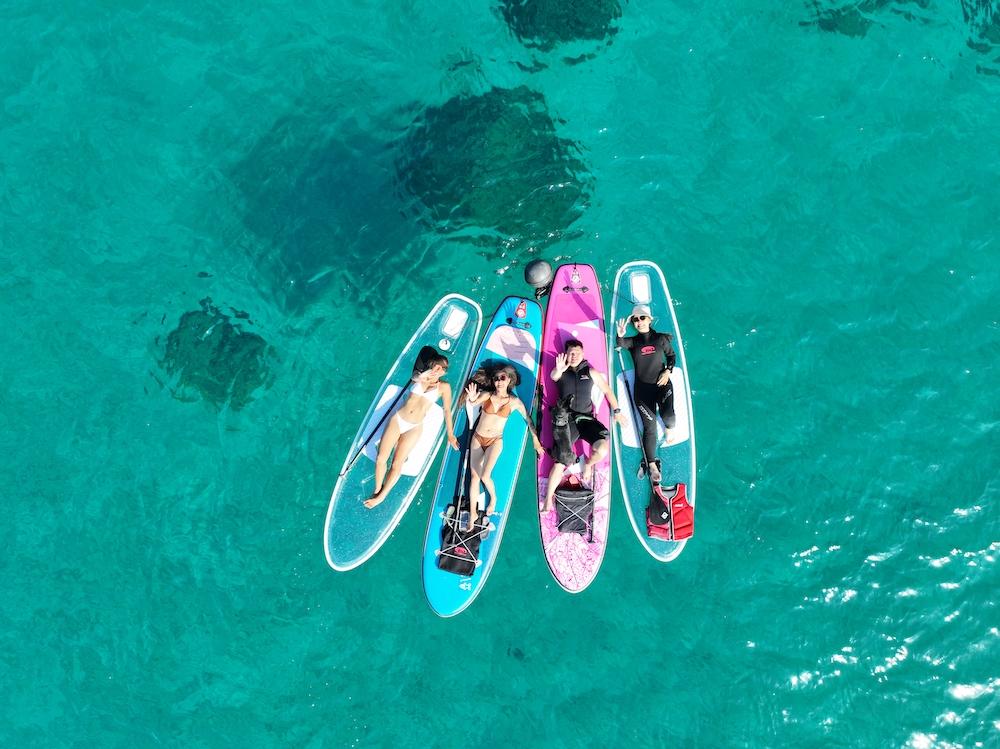
Heart Ocean Diving Center is located in Houbihu, just a ten-minute drive from Hengchun Transfer Stat…
SUP: Two people, one board vs. one person, one board
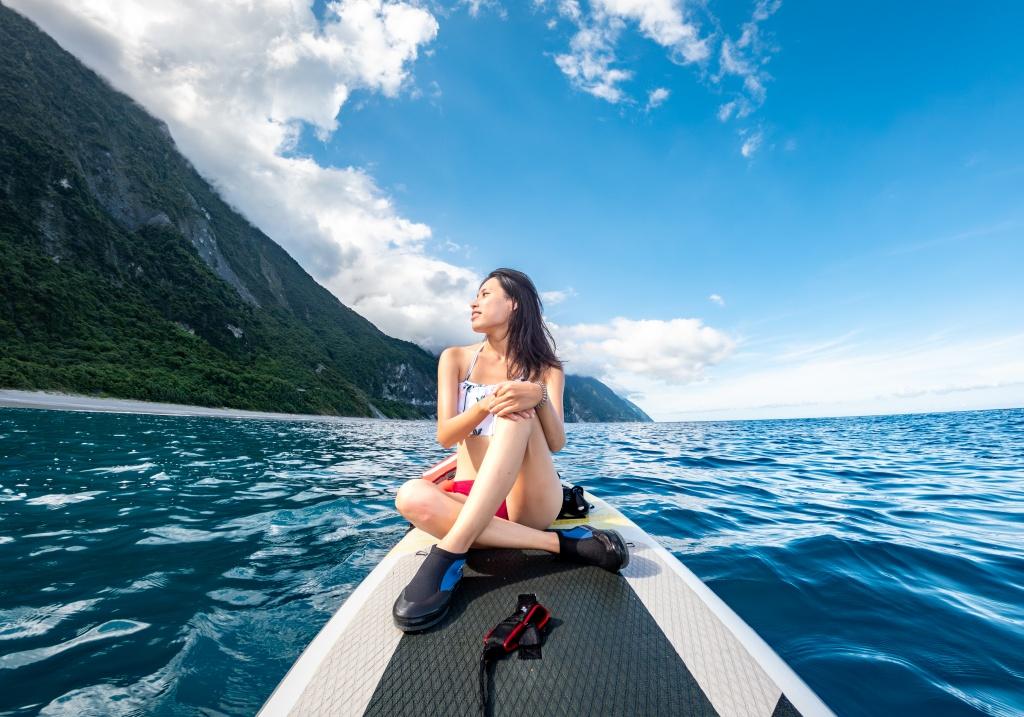
When you sign up for a SUP experience, you'll often see venues specify "one board for two people" or "one board per person." The simplest way to explain the difference is whether one person operates the SUP board alone, or two people ride it together.
With one board per person, you're the only one on the board, so it's relatively more stable on the water. Since it's less affected by weight, it's easier to paddle and makes for better photos. However, because there's no one to help, you're entirely on your own for the whole experience.
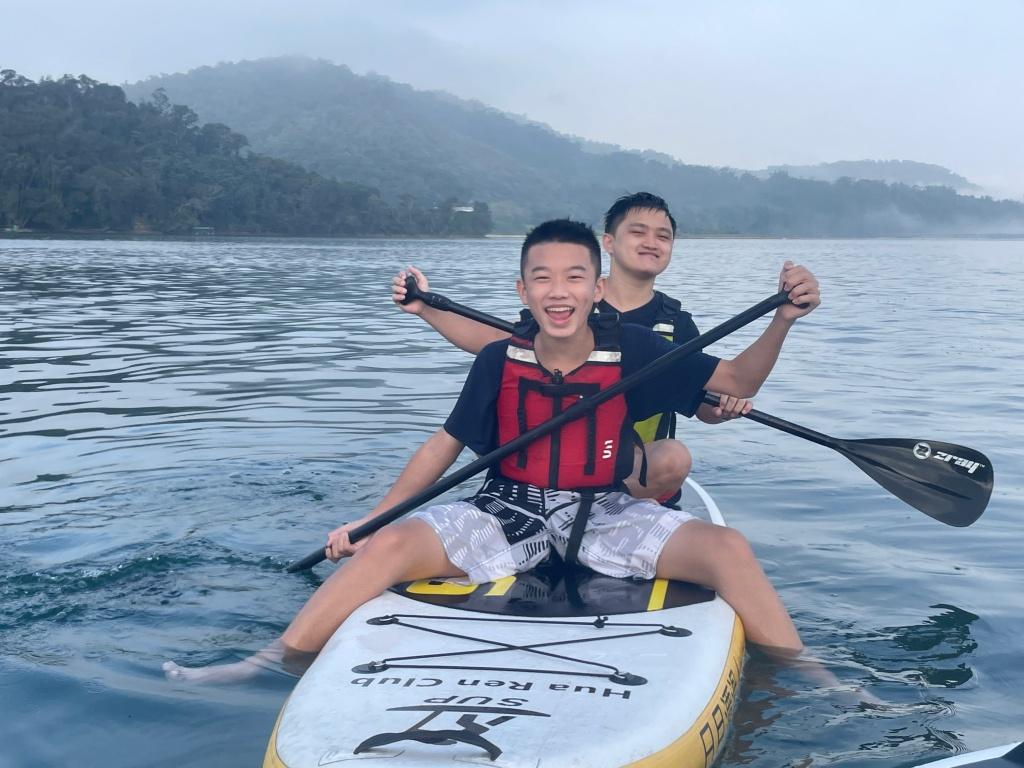
For two people per board, the SUP board used is usually larger than a single-person board because it needs to carry the weight of two people. Also, because it's harder to balance two people's centers of gravity, if your coordination isn't good, it's easy to accidentally fall into the water. But since there are two of you, if one person gets tired, the other partner can help out, and you can take turns paddling.
✦Who Should Try a Solo SUP Experience
- Those who prefer to be in control
- Those who want to take great photos
- Those with good physical stamina
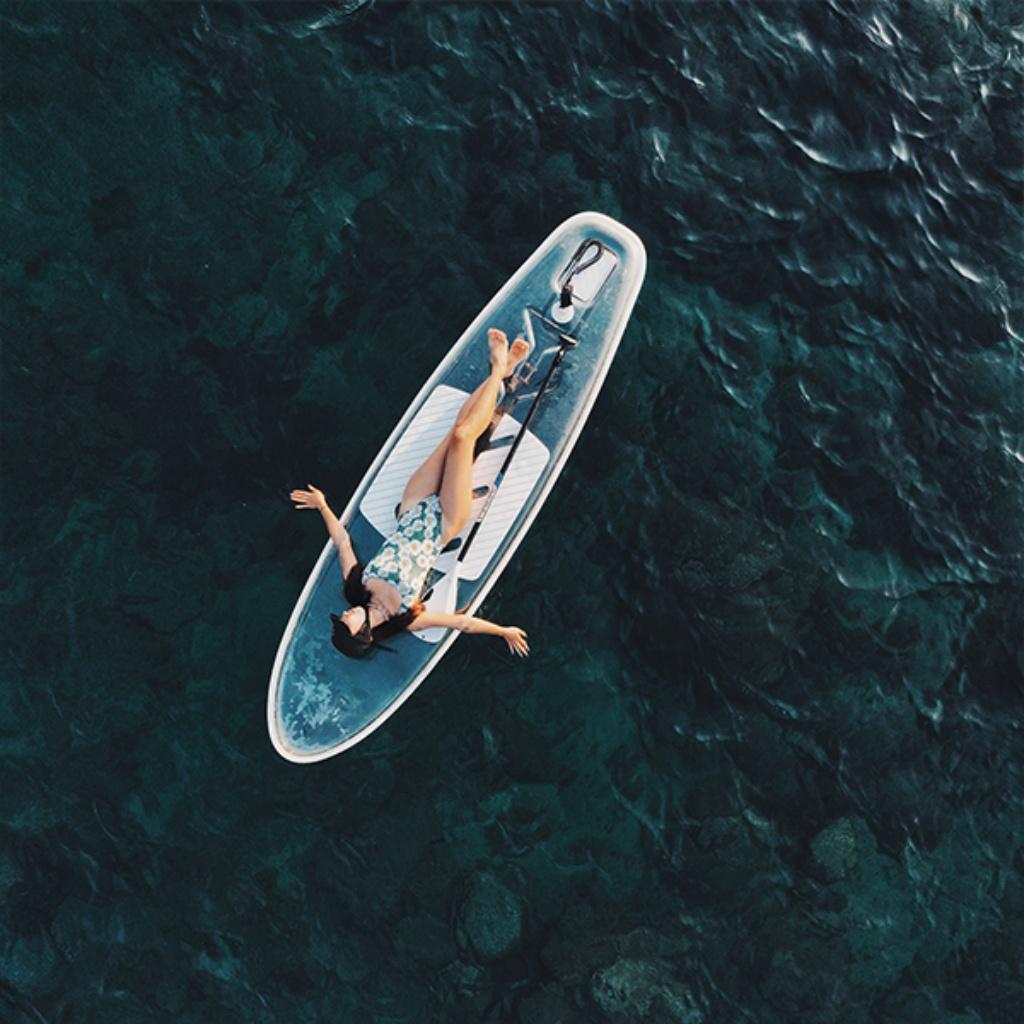
✦Two-Person SUP: Who It's For
- Couples
- Families with children
- Those with limited mobility
- Those prone to motion sickness
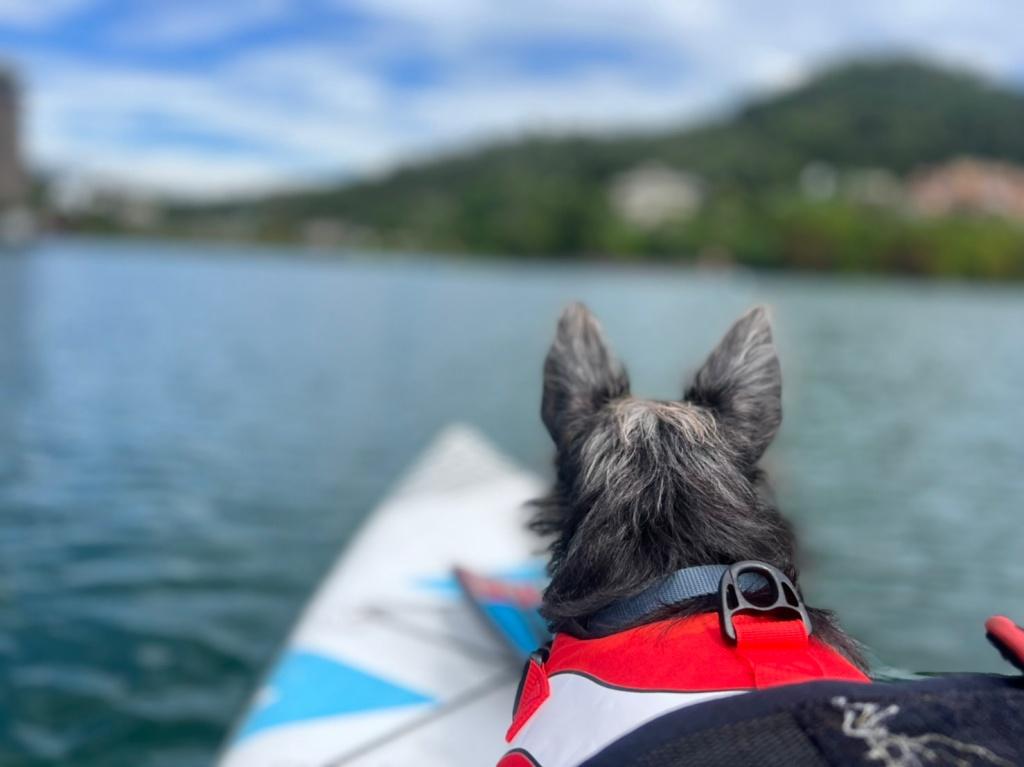
✦Yes, you can bring your pets to enjoy stand-up paddleboarding (SUP).
Stand-up paddleboarding (SUP) is an ideal water activity to enjoy with pets like dogs and cats. The large board surface and high buoyancy make it difficult for pets to fall into the water, and most dogs love to swim anyway, so there's no need to worry if they do take a dip. If you're concerned about your furry friend's safety, pet life vests are available; just ask the venue in advance or bring your own, and you'll be ready for a happy outing on the water with your pet.
There is no weight limit for SUP.
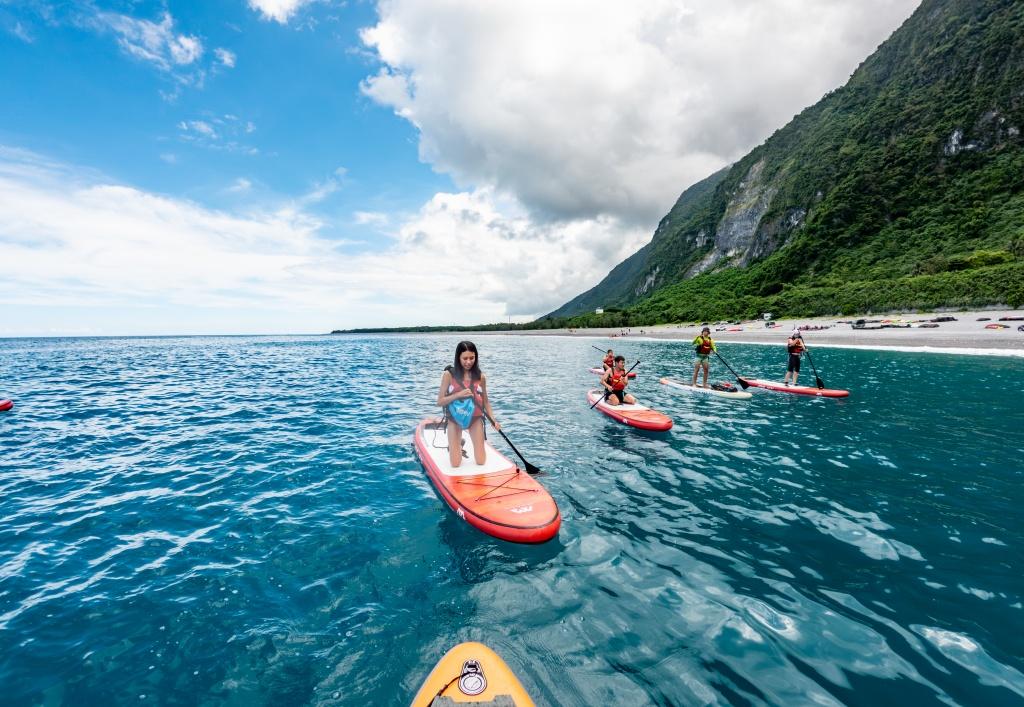
There are virtually no weight limits for stand-up paddleboards (SUPs), as most boards can support far more weight than the average person.
There are two common types of SUP boards: inflatable and hardboards. Hardboards are more commonly used due to their high stability, solid construction, and greater weight. Inflatable boards offer good buoyancy but are less stable. Most boards can support up to 150 kg.
While there's no strict weight limit for SUPs, for player safety, it's generally recommended that individual riders on a single board weigh no more than 100 kg. For two riders on one board, their combined weight should not exceed 155 kg. However, these recommendations can vary slightly depending on the specific SUP boards used by the venue.
Why learn stand-up paddleboarding?
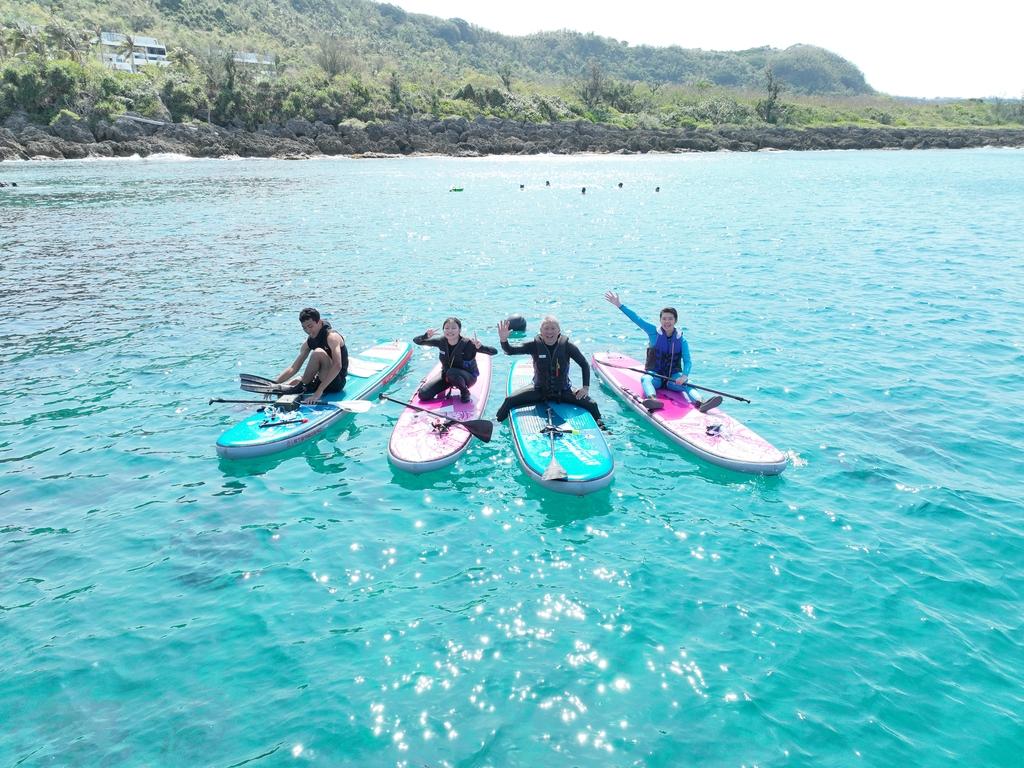
Many people mistakenly believe that because stand-up paddleboards (SUPs) are buoyant and difficult to fall off, they can easily buy a board and head straight into the water. However, there are significant hidden risks involved. A good instructor will guide you through four key areas of learning, ensuring both safety and professionalism. Once you've mastered these basic techniques, if you're interested in further developing your SUP skills, advanced techniques such as walking the board, pivoting, and jumping can make the SUP experience even more exciting.
✦Environment and Safety
Because every body of water presents different hidden risks, local professional coaches select paddling routes tailored to each student's skill level. During the activity, students are guided on how to assess environmental risks, understand local regulations, learn about eco-friendly practices, and evaluate factors like wind, weather, waves, and currents to ensure future safety when paddling solo.
✦Gear Introduction
The venue provides professional equipment tailored to each student's needs, matching the right board type to their chosen route. They even offer various boards for students to try, helping them understand what suits them best before making a purchase and avoiding wasted money on unsuitable gear.
✦Water Safety
We teach participants how to properly wear a buoyancy aid, how to use it to float safely on the water, how to correctly use a leash, how to get on the board easily and efficiently, and how to perform water rescues.
✦Proper Rowing Form
Many first-timers mistakenly believe that standing on a SUP is easy to fall or that sitting is more relaxing, but proper SUP paddling technique can prevent arm soreness and reduce the risk of falling in.
There are a few key techniques for standing on a SUP.
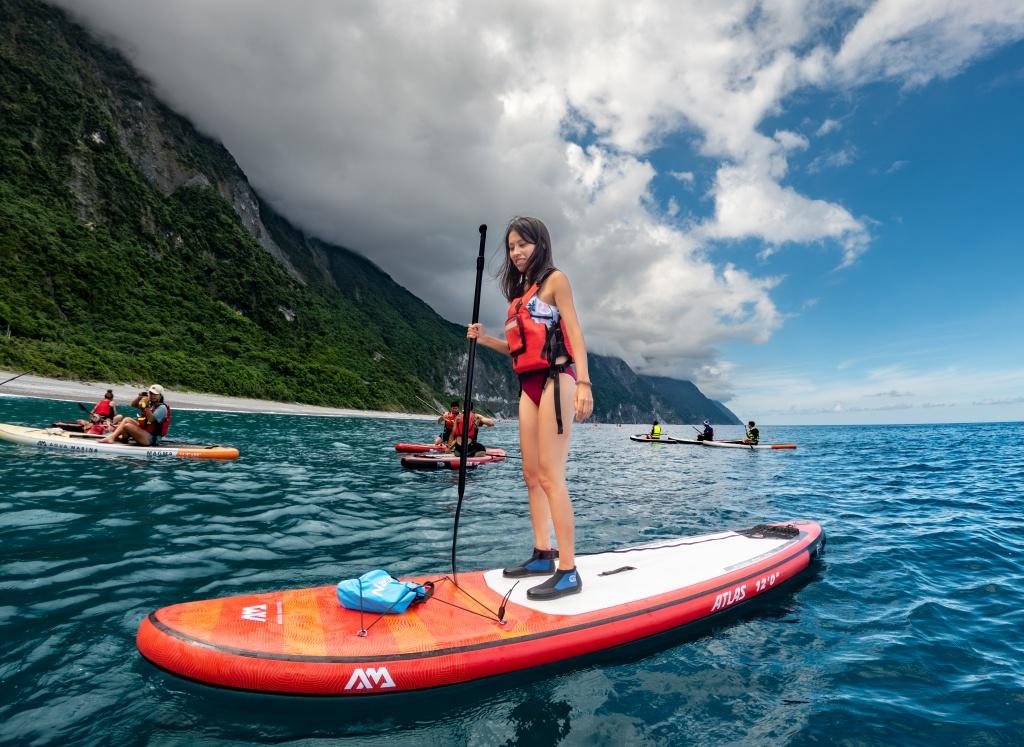
Many people think standing on a SUP board is difficult, but the truth is, your stance on the board, body posture, center of gravity, and paddle balancing technique are all crucial for stability. A professional SUP instructor will teach you how to use the paddle for balance, leveraging the pressure between the paddle blade and the water to help you regain equilibrium when you feel unsteady. This makes SUP standing techniques completely different from surfing, as the paddle plays a key role in the standing process. Here are some quick tips for checking your SUP stance and paddling technique, so you can feel more confident on your next stand-up paddleboarding adventure:
✦SUP Stand-Up Paddleboarding
- Keep your back straight.
- Look straight ahead.
- Keep your knees slightly bent and flexible.
- Stand with your feet shoulder-width apart.
- Point your toes forward.
- Stand in the center of the board.
✦SUP Paddling
- Extend your lower hand forward.
- Pivot from your hips.
- Keep your back straight and extend forward and down.
- Bring your upper hand down, entering the paddle vertically into the water.
- Engage your core to propel the board forward.
- Rotate your hips to bring the paddle vertically out of the water beside your feet.
- Rotate the paddle inward to minimize resistance as you push it forward.
Common SUP player mistakes include:
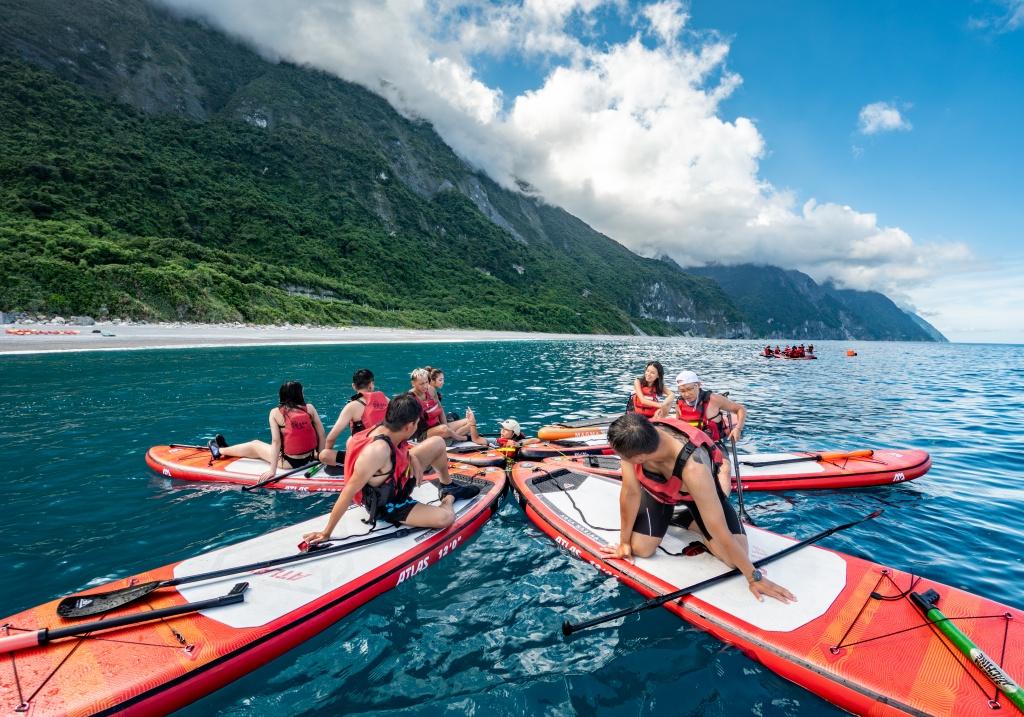
If you've been stand-up paddleboarding (SUP) for a while but still experience arm fatigue or instability, you might be making some common mistakes. Here are a few frequent errors SUP paddlers make—check your form next time you're on the water!
✦Common SUP Posture Mistakes
- Hunching
- Looking at the water surface
- Knees not bent
- Knees bent too much
- Feet too wide apart
- Feet turned out
- Paddle blade entering water at an angle
- Inconsistent knee bend angle
- Forearms bent
- Paddle blade exiting water behind the body
- Uneven force distribution between left and right legs when paddling
Taiwan offers excellent SUP opportunities year-round, with different regions shining in different seasons.
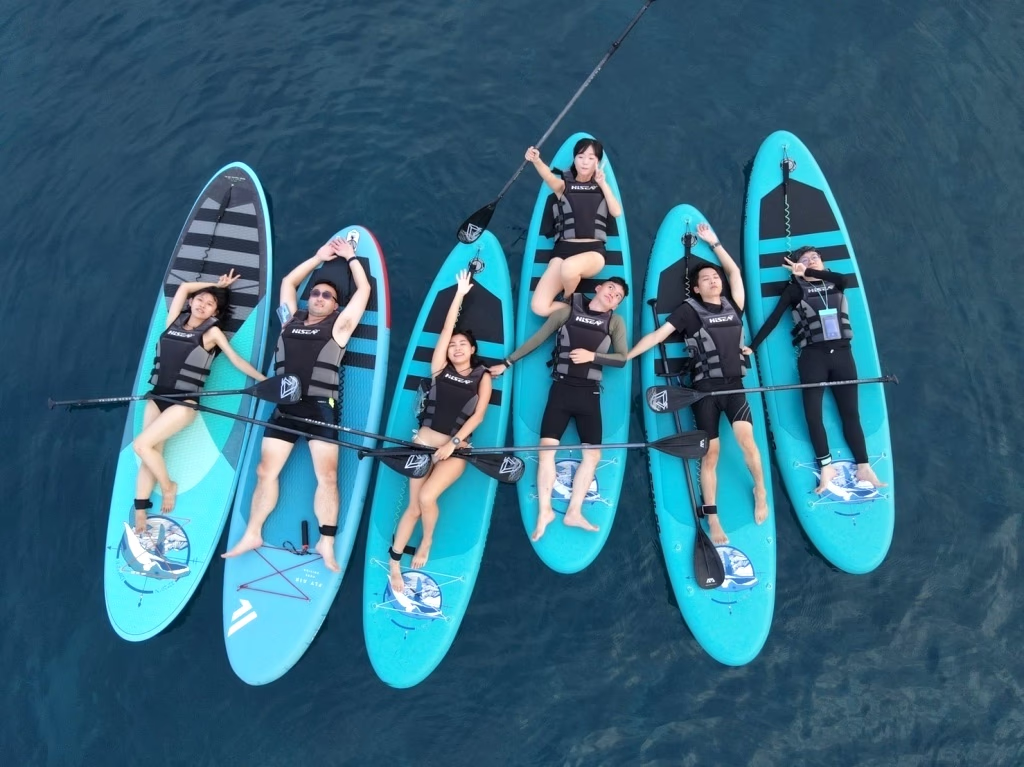
Taiwan is an island nation with a long, narrow shape, surrounded by ocean and bisected by the Tropic of Cancer, making it ideal for stand-up paddleboarding (SUP) year-round. When it comes to recommended SUP spots in Taiwan, nearly all rivers and coastal areas are suitable in summer. During spring, autumn, and winter, in addition to rivers across the island, the southern coast also offers excellent conditions. Each waterway and coastal area boasts unique beauty, and we highly recommend trying them all.
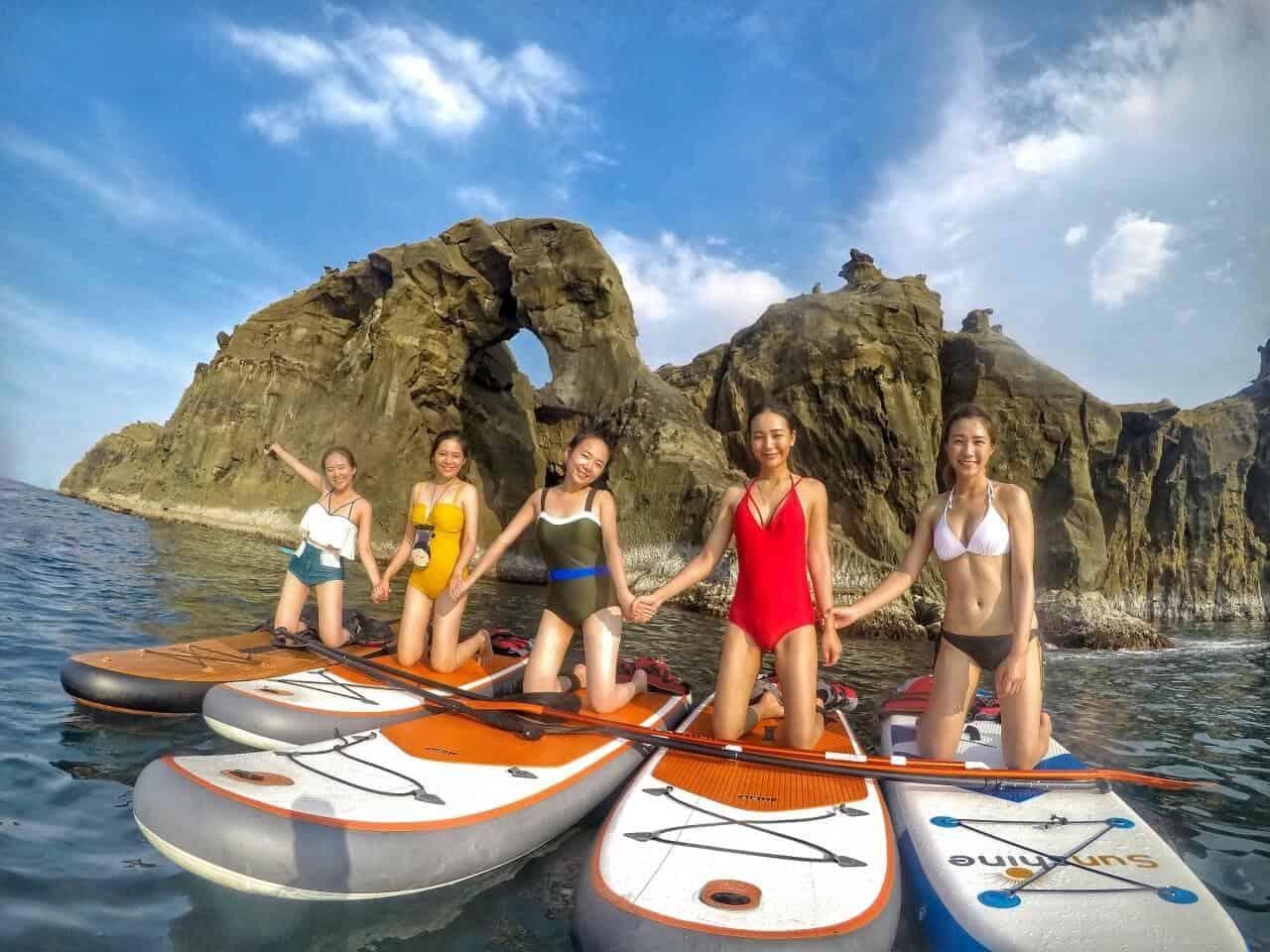
✦Northern Taiwan SUP Spots
Recommended SUP Spots in Northern Taiwan
- Xiangbi Rock, Ruifang, New Taipei
- Highlight: Sea cave
- Longdong, Gongliao, New Taipei
- Highlight: Sea cave
- Fulong, Gongliao, New Taipei
- Highlight: Calm waters, ideal for beginners
Best Season for SUP in Northern Taiwan
- May to September
- Avoid the plum rain season, typhoon season, and the northeast monsoon season.
✦Central Taiwan SUP Spots
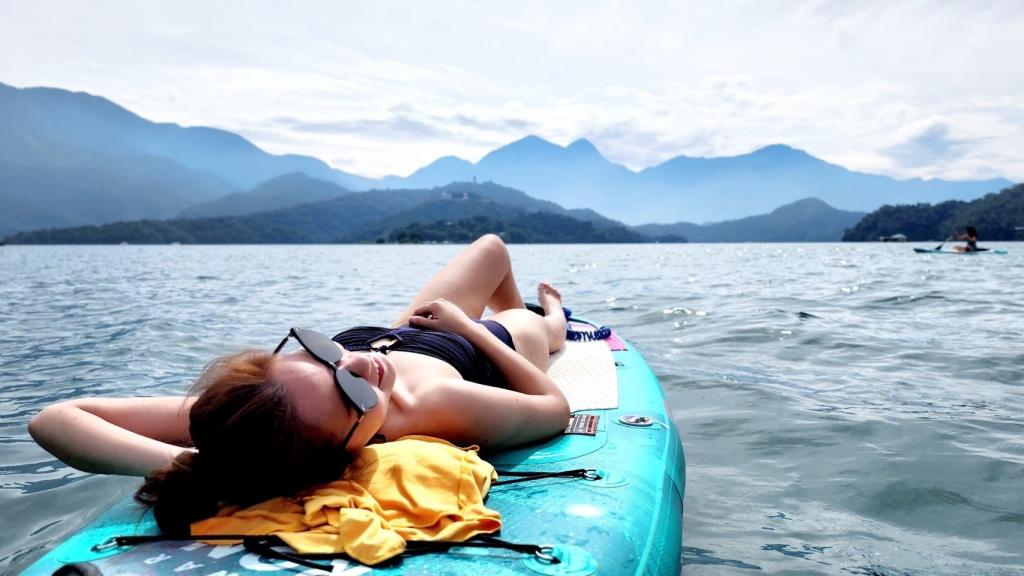
Recommended SUP Spots in Central Taiwan
- Sun Moon Lake, Nantou
- Highlights: Scenic lake and mountain views, calm waters
Best Seasons for SUP in Central Taiwan
- Year-round
- Avoid the monsoon season (plum rain and typhoons)
✦Southern Taiwan SUP Spots
Recommended SUP Spots in Southern Taiwan
- Xiaoliuqiu, Pingtung
- Features: Comfortable water temperatures in winter, great for combining with snorkeling.
- Kenting, Pingtung
- Features: Comfortable water temperatures in winter, great for combining with snorkeling.
Best Seasons for SUP in Southern Taiwan
- Year-round
- Avoid the monsoon and typhoon seasons.
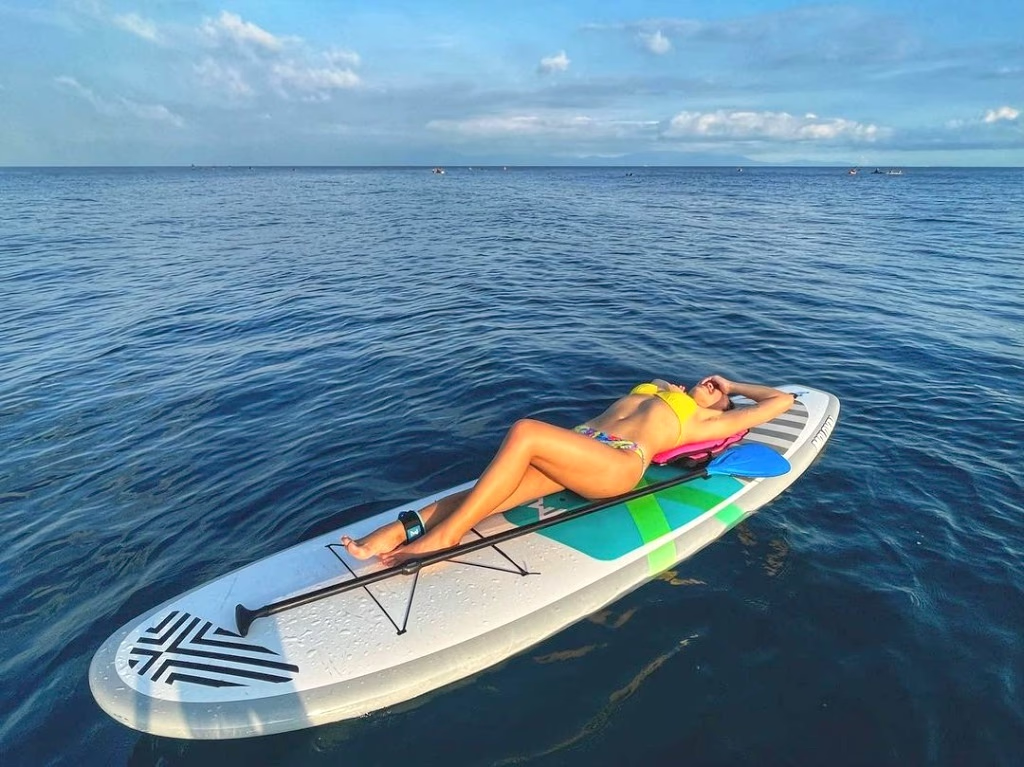
✦Recommended SUP Spots in Eastern Taiwan
Recommended SUP Spots in Eastern Taiwan
- Fenniaolin, Yilan
- Highlight: Coastal rock formations
- Guishan Island, Yilan
- Highlight: "Milk Sea" unique seascape
- Qingshui Cliffs, Hualien
- Highlight: Dramatic cliffs, where sea meets sky
- Liyu Lake, Hualien
- Highlight: Calm waters, less affected by weather, easier to organize groups
Best Season for SUP in Eastern Taiwan
- April to October
- Avoid the plum rain season, typhoon season, and northeast monsoon season
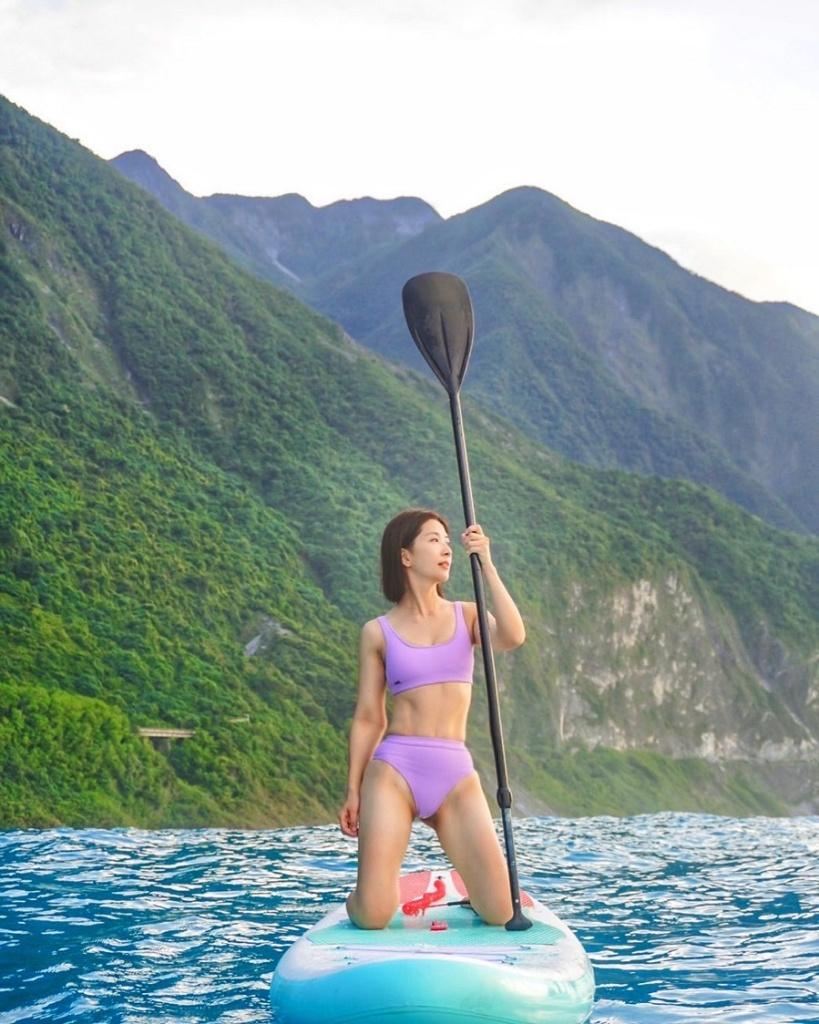
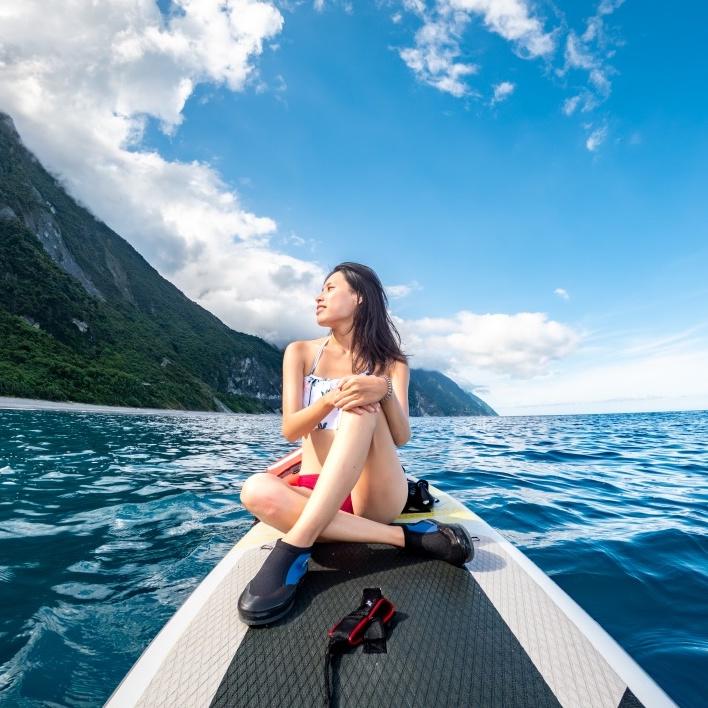
Experiencing Hualien SUP in front of the majestic Qingshui Cliffs is on many travelers' bucket lists…
While you're here, check these out ↓
Yes, SUP stand-up paddleboarding has professional certifications.
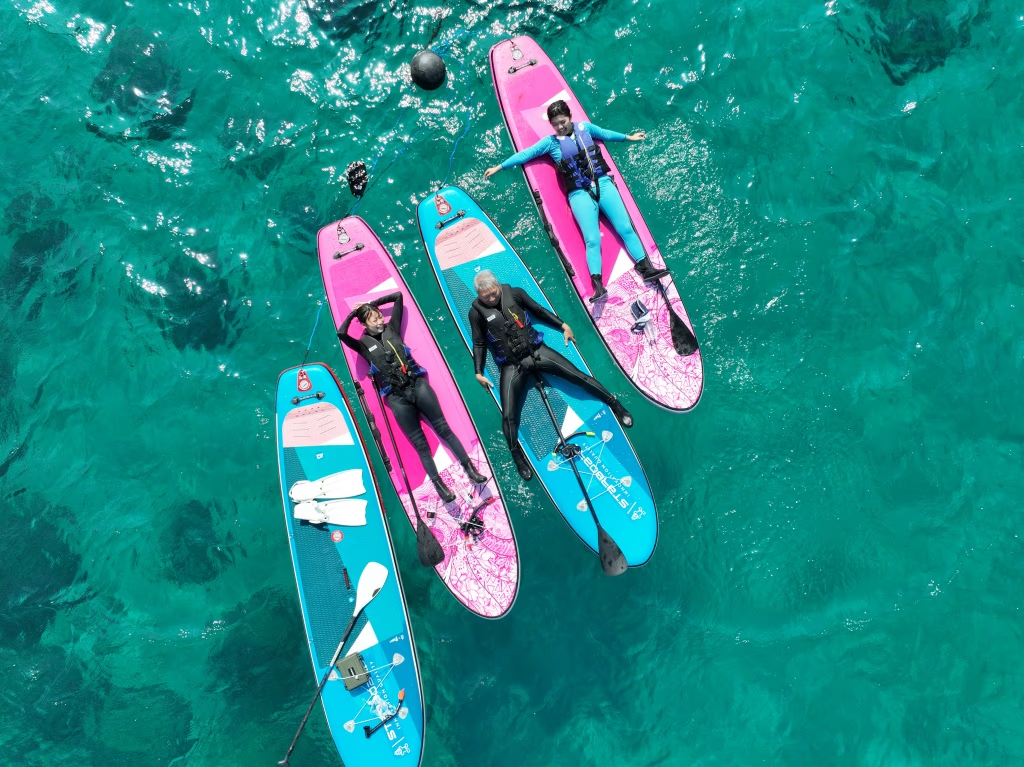
If you're looking to become a professional SUP instructor, there are two main international certifications: ISA and ASI. In Taiwan, the Sports Federation also partners with many local sports associations to host instructor training workshops. After passing the assessment, you can obtain a SUP instructor certificate recognized by the Sports Federation. There are also many unofficial associations that offer instructor training courses, typically issuing their own printed certificates without Sports Federation approval.
✦The professional fields of stand-up paddleboarding (SUP) include racing, surfing, touring, and yoga.
Beyond beautiful photos and scenic views, stand-up paddleboarding (SUP) is a competitive sport with numerous international events. These competitions test a wide range of skills, including balance, core strength, speed, stamina, technique, and the ability to navigate wind and waves, allowing SUP to be enjoyed in diverse environments.
Main SUP Competition Categories
- SUP Surfing
- SUP Racing
- SUP River
- SUP Downwind
- SUP Freestyle
- SUP Yoga
- SUP Foil
Final Thoughts
This beginner's guide to SUP answers 10 common questions for those looking to get started with stand-up paddleboarding, compiled by Twosevenths to provide essential information.
In Taiwan, SUP experiences typically range from $1,000-$2,000 NTD per person. Beyond the board and safety gear, venues often offer additional services like photography, drone footage, and snacks; some even include extra underwater activities such as snorkeling. To find the perfect SUP venue for you, check out our related articles: Taipei SUP, Xiaoliuqiu SUP, Hualien SUP, and Sun Moon Lake SUP Recommendations.
More Water Activity Information:
Direct SUP Travel Itineraries:
Don't miss these either

Yingge Day Trip Itinerary|From the Ceramics Museum to Old Street Cafes: A Relaxed Getaway
Penghu Freediving Recommendations|Professional and attentive instructors ensure your safety! A review of 3 Penghu freediving venues.
Hana Diving Resort Review|Dive and Work: A Digital Nomad-Friendly Diving Resort

Reader Comments
No comments yet — be the first to share your thoughts.